
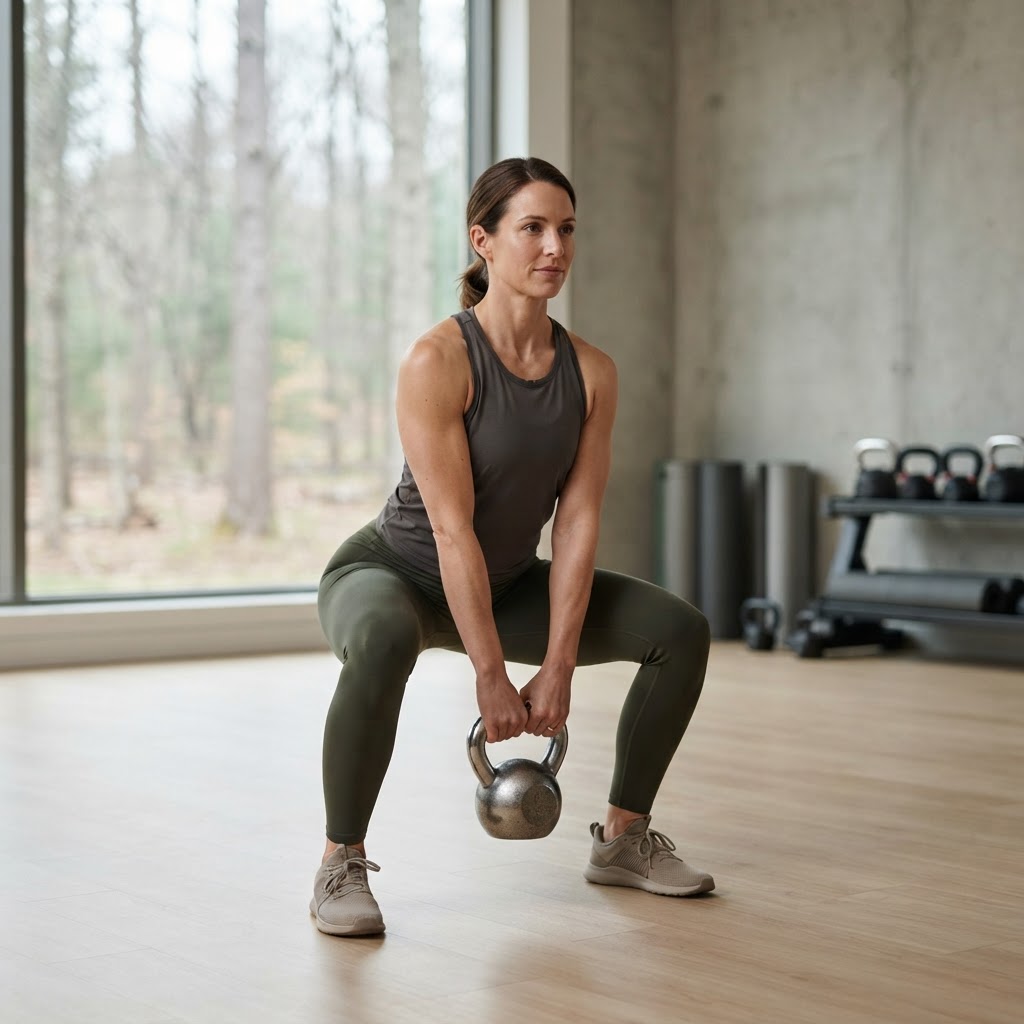
If you have been training consistently, you have likely hit the wall. You are pushing hard, your volume is high, and your form is solid, yet you find yourself stuck at the exact same point in your squat or overhead press every single time. This is not a failure of effort; it is a failure of stability. When we focus exclusively on moving weight from point A to point B, we often ignore the 'dead zones'—those specific anatomical angles where our muscles are at a mechanical disadvantage and our joints lack the necessary tension to transition smoothly.
The Physics of the Gap: Why Momentum Hides Weakness
In dynamic lifting, momentum is a double-edged sword. It helps us complete reps, but it also masks structural weaknesses. When you move a barbell through a full range of motion, your body naturally accelerates through the 'easy' parts of the lift and decelerates through the 'hard' parts. This means your stabilizing musculature is rarely challenged at the precise angles where you are weakest. By relying on momentum, you are essentially skipping over the very points that dictate your true strength ceiling.
True strength is not just about moving weight; it is about the ability to maintain structural integrity at the exact moment of maximum mechanical disadvantage.
The 3-Angle Isometric Testing Framework
To resolve these plateaus, you must isolate the 'dead zones' using fixed-position holds. This framework requires you to perform static holds at three critical phases of your primary lift. By removing momentum, you force your nervous system to recruit stabilizing fibers that are usually bypassed.
- Initiation Phase: Hold the weight at the very start of the movement (e.g., just off the pins in a squat) for 5-10 seconds.
- Midpoint Phase: Hold the weight at your known 'sticking point'—the exact angle where the bar usually slows down—for 5-10 seconds.
- Terminal Phase: Hold the weight at the end of the concentric range (the lockout) to ensure total joint stability under load.
Implementation: The Squat Example
Let’s apply this to the barbell squat. If you consistently fail at the bottom of the squat, your 'dead zone' is the transition from eccentric to concentric. To fix this, set your safety pins to that specific depth. Perform a 'pushing' isometric hold by driving the bar into the pins as hard as possible for 5 seconds. This isolates the quadriceps and gluteal stabilization without the risk of a failed rep. Note that this is high-intensity work; perform this as a single 'isometric-tension' set in place of one of your heavy working sets to avoid overtaxing your central nervous system.
Limitations and Safety
While isometric training is highly effective for building stability, it is not without risk. Because you are applying maximal force against an immovable object, the stress on your tendons is significant. Always perform a thorough dynamic warm-up before attempting these holds. If you feel sharp pain in the joint rather than muscular tension, reduce the intensity immediately. For those looking to integrate these methods into a broader routine, our 90-Minute Weekly Fitness System provides a structured approach to balancing these high-tension sessions with necessary recovery, ensuring you build power without burning out.
