
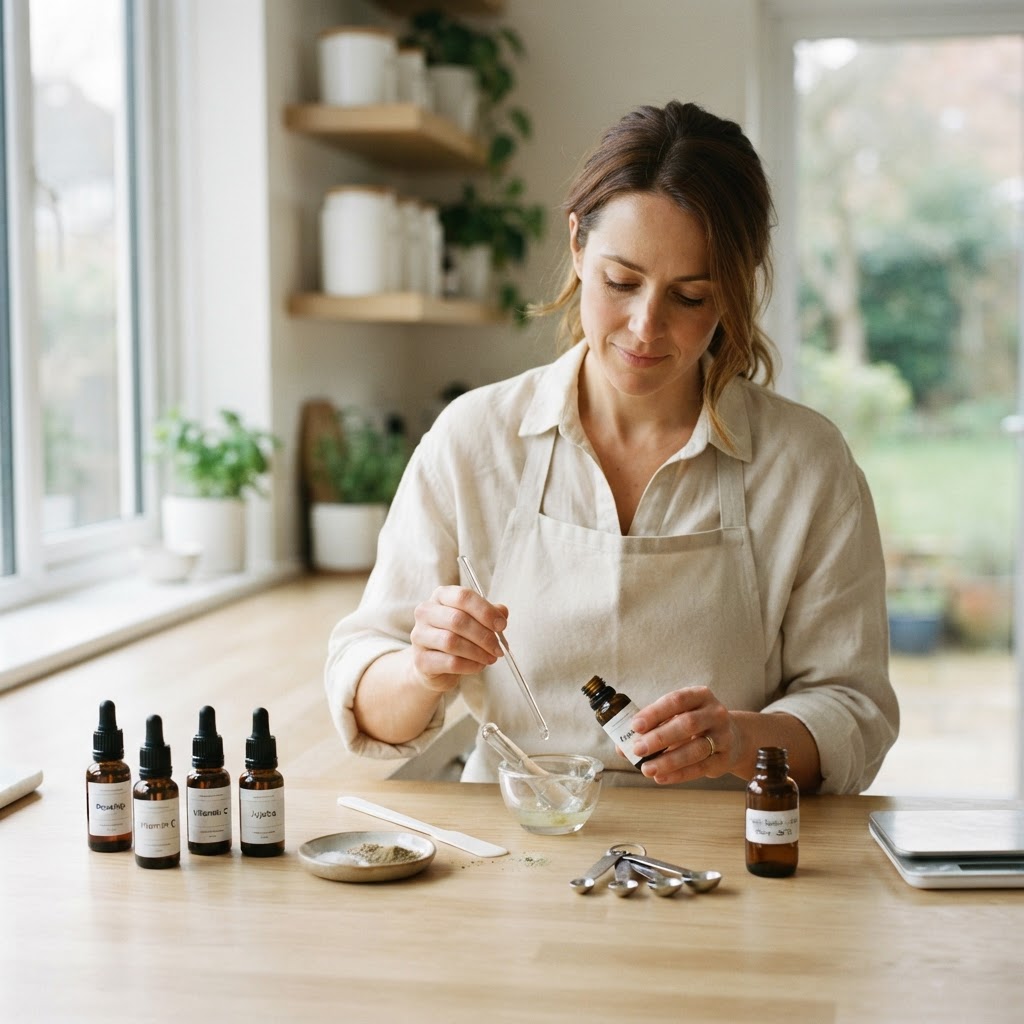
Most consumers treat their skincare collection as a static asset—a shelf of bottles that remain effective until the printed expiration date. In reality, your high-value serums are perishable goods. Once a seal is broken, the clock on molecular integrity begins to tick. Oxidation and bacterial contamination turn potent actives into inert liquids long before you reach the bottom of the bottle, leading to wasted financial investment and stalled skin results.
The Post-Opening Half-Life Reality
Standard expiration dates are often legal formalities based on unopened stability. The true metric for efficacy is the 'Post-Opening Half-Life.' Every time you unscrew a jar or pump a serum, you introduce oxygen and potential contaminants. For unstable actives like L-ascorbic acid (Vitamin C) or certain retinoids, this exposure triggers a rapid decline in concentration. Research indicates that even unopened products can lose significant potency if stored incorrectly, and once opened, the degradation accelerates exponentially.
If a product truly relies on sensitive, hard-to-stabilize actives, I want to see opaque, airless, low-headspace packaging. Otherwise, you paid for ‘vitamin C’ and are using ‘vitamin C’s eulogy’ by week six.
The Micro-Batching Protocol
To stop the cycle of waste, you must shift from 'bulk purchasing' to 'micro-batching.' This involves mapping your consumption speed against the product's stability window. If a serum has a 3-month post-opening shelf life, but your usage rate suggests it will take 6 months to finish, you are paying for 3 months of ineffective product.
- Label every bottle with the 'Date Opened' using a permanent marker or sticker.
- Categorize your actives: Stable ingredients (like niacinamide) can handle longer cycles, while labile ingredients (peptides, growth factors, Vitamin C) require strict 3-month turnover.
- Calculate your 'Consumption Velocity': If a 30ml bottle is meant to last 90 days, you must use approximately 0.33ml per day. If you aren't hitting this, you are over-purchasing.
- Audit your storage: Move labile actives to a cool, dark environment—or the refrigerator—to slow molecular breakdown.
Worked Example: The 30ml Serum Strategy
Consider a 30ml Vitamin C serum with a 3-month (90-day) post-opening stability window. To maximize your investment, you must ensure the bottle is empty by day 90. If you track your usage and find you are only 25% through the bottle at day 60, you have two choices: increase your application frequency (if your skin barrier allows) or switch to a smaller volume product (15ml) to ensure you finish the bottle while the formula is still at peak potency. This prevents the 'silent cost bleed' of using oxidized, ineffective ingredients.
Limitations and Environmental Volatility
This protocol requires strict adherence to usage frequency. It does not account for environmental volatility; if your bathroom experiences high humidity or temperature fluctuations, the half-life of your products will shorten regardless of your tracking. Furthermore, this method assumes the product was manufactured with high-quality, airless packaging. If you are using products in open jars, the oxidation rate is significantly higher, and the micro-batching window should be reduced by 30-50% to compensate for the lack of protective design.
By treating your skincare as a perishable asset, you ensure that every application delivers the clinical results you paid for, rather than just applying a degraded formula that no longer serves your skin.
